Thursday, 28 November 2024

Critical Reflection

Looking back on this module, I can see significant growth in both my knowledge and interpersonal skills. Through active engagement and participation, I became more comfortable expressing my thoughts and interacting with my peers. Professor Blackstone’s consistent encouragement to voice our opinions and present in front of our peers fostered an inclusive learning environment that nurtured my confidence.

A goal I set for myself at the start of the course was to avoid using filler words to sound more confident and credible, and I feel that I have achieved it. Even outside of class, I make a conscious effort to form complete sentences and take necessary pauses when thinking, rather than relying on filler words. This has not only improved my communication but also improved my confidence in expressing myself and my ideas. 

At the start of the module, I often accepted information at face value and lacked the habit of questioning or analysing it deeply. However, through this module, I gained valuable insights into frameworks such as the Paul-Elder framework and the 7Cs of communication, learning how to apply them effectively. These frameworks taught me to evaluate ideas critically and consider multiple perspectives before concluding. Additionally, I developed the ability to break down complex problems, challenge assumptions, and analyze evidence more thoroughly. As a result, my ability to write clear, logical, and non-bias reports has significantly improved.

One instance that highlighted this growth was during a group discussion about the printing mechanism of SLA 3D. Initially, I found myself agreeing with the majority opinion without much hesitation as I lacked knowledge on this. Reflecting on this after the session, I recognized the need to challenge assumptions and ask probing questions. In subsequent tasks, I consciously tried to probe our idea and ultimately change it from the machinery to the material used instead. This development has not only enhanced my academic work but also sharpened my decision-making skills in everyday situations.

Being placed in a team settings with people I barely knew during the first week felt intimidating. There were many uncertainties about how others preferred to work, both individually and collaboratively, which made me apprehensive. However, through this module, I have gained confidence in working within teams and group settings due to the many swaps we had through this 13 weeks. Having interacted with more than 50% of the class made me feel more comfortable and confident to talk in front of my peers. I have learned that mutual respect plays a key role in fostering teamwork, and I believe that reflecting respect and being open toward others encourages them to reciprocate.

For my presentation, I felt confident and natural, largely due to my past experiences speaking in front of crowds during my time in the army. However, I recognise that there are still gaps to be addressed and habits that need improvement. This module provided me with valuable feedback from not only my peers but also from Professor Blackstone. Professor Blackstone’s constructive feedback gave me a deeper understanding of how to structure my presentations effectively, engaging the audience and improving my tone and emphasis on certain words.

In terms of writing, I have observed significant improvement thanks to the variety of assignments we have completed throughout the module. These tasks allowed me to receive thoughtful feedback from both my peers and Professor Blackstone. I deeply value this feedback, as it serves as a reminder that growth is a continuous process. Through this experience, I have learned that constructive criticism is essential for personal and professional development. I now cherish opportunities to learn and improve, knowing that each step brings me closer to becoming a better version of myself.

This combination of feedback has taught me the value of seeking different perspectives to grow as an individual. Overall, I have learned that continuous improvement is rooted in embracing criticism and reflecting on how to apply it effectively.

Thursday, 21 November 2024

Reader Response Draft #4

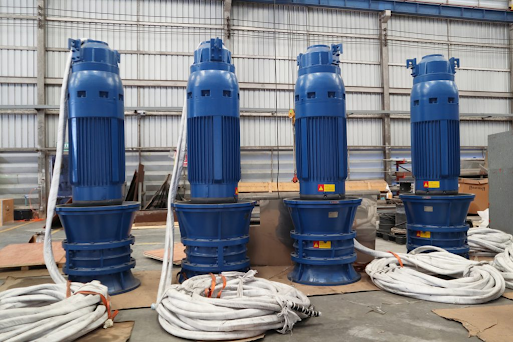
The article “Submersible Pump: Working, Types, Applications, & How To Prime It” by Waqar (n.d.-a) gives a brief introduction to submersible pumps, highlighting their key features and advantages. Waqar (n.d.-a) explains that submersible pumps are specialised devices used in leachate environments to move fluid while submerging in liquid. As these pumps mostly operate underwater, they avoid the possibility of cavitation forming, resulting in greater lifetime and dependability. Additionally, they do not require any priming, simplifying the setup procedure and thus increasing their efficiency. These features allow the pump to excel in handling a wide range of applications that revolve around liquid. For instance, they are able to collect groundwater in deep wells and regulate sewage and drainage systems in cities. Overall, these pumps are essential for fluid management due to the combination of cavitation prevention and the overall operational simplicity. While centrifugal pumps are an alternative in the market, engineers in leachate environments prefer submersible pumps because they reduce cavitation and are simple to install.

One of the features of a submersible pump is their cavitation prevention. Cavitation is the formation of vapour bubbles caused by a drop in liquid pump pressure below the vapour pressure level. Aniket (2024) states that submersible pumps are less likely to experience cavitation. The article discusses how submersible pumps can prevent cavitation by sustaining appropriate pressure levels when submerged by stopping vapour bubbles from forming. When compared to centrifugal pumps, submersible pumps are regarded as efficient due to their ability to successfully regulate internal pressure underwater. Centrifugal pumps are often installed above ground and rely on suction lines to prevent cavitation. If these suction lines are poorly designed or have any obstruction to them, cavitation is likely to arise due to pressure fluctuations. As submersible pumps can internally control pressure, these pumps excel in wastewater environments, where they are placed deep in leachate environments to transport liquid.

Another feature of the submersible pumps is their ease of installation. The unique design of a submersible pump allows it to be placed in deep locations such as pits or deep wells. Submersible pumps are more space efficient as they are only operational underwater, making them perfect for tight or confined spaces. In contrast, centrifugal pumps are usually installed above ground, which requires much more space for installation (Crompton, 2024). In addition, submersible pumps do not require any form of priming. According to Adam (2024), submersible pumps do not require any manual effort to eliminate air bubbles from the pump and suction line, thereby providing convenience and reliability. Whereas centrifugal pumps are generally not known to be self-priming. Most of these pumps require to be manually started up to remove any air from the pump and suction lines. A drop in fluid level or air entering the system might cause the pump to lose its prime, making it impossible to function optimally unless it is manually primed again.

While submersible pumps come with their advantages, there are some challenges associated with their use. Unlike other types of pumps, centrifugal pumps can readily pump in large volumes within a short time. These pumps are applicable in leachate environments due to their fast flow rates and ease of use. Crompton (2024) says that submersible pumps are best at consistently holding the same level of flow while high flow rates at not very low pressures are typical for centrifugal pumps. As centrifugal pumps can hold high flow rates, they can transport large amounts of liquid instead of slowing down and managing at a consistent and slower pace. In addition, as stated by Eddypump (n.d.), submersible pumps can be challenging to access for regular inspections or maintenance, particularly in deep-well applications. This limitation sometimes leads to their use until failure, resulting in replacement rather than preventative maintenance. However, despite these drawbacks, the reliability, compact design, and ability to prevent cavitation from submersible pumps still prevail over the limitations it has. This makes them an indispensable choice for leachate environments and applications that require steady and low-maintenance.

Overall, submersible pumps in leachate environments can prevent cavitation and are reliable and efficient due to not requiring a constant manual start-up. The compact design of the pump allows it to be installed in confined spaces like deep wells or landfills. While centrifugal pumps can offer a higher flow rate, submersible pumps are ideal in wastewater management and fluid transportation in leachate environments because of their steady results and low maintenance.


References

Crompton. (2024, August 23). Centrifugal Pump Vs. Submersible Pump: Know The Differences. https://www.crompton.co.in/blogs/pumps/centrifugal-pump-vs-submersible-pump

Hurlbatt, A. (2024, June 23). How submersible pumps work: Advantages and disadvantages of submersible pumps. Pump Solutions Australasia. https://pumpsolutions.com.au/how-submersible-pumps-work-advantages-and-disadvantages-of-submersible-pumps/

Raj, A. (2024, April 25). Unlocking efficiency: A comprehensive guide to submersible pumps. EDDY Pump. https://eddypump.com/blog/guide-to-submersible-pumps/

Waqar, E. (n.d.-a). Submersible pump: Working, types, applications, & how to prime it. Mechanical Boost. Retrieved October 2, 2024, from https://mechanicalboost.com/submersible-pump/#more-2846

Waqar, E. (n.d.-b). What is centrifugal pump?: How does a centrifugal pump work?. Mechanical Boost. Retrieved October 2, 2024, from https://mechanicalboost.com/centrifugal-pump-an-overview/#Centrifugal_Pump_Working

What you need to know about submersible pumps. EDDY Pump. (n.d.). https://eddypump.com/education/what-to-know-about-submersible-pumps/ 

Sunday, 20 October 2024

Project Contributions

  1.  I contributed pitch ideas for the group to discuss on
    • I researched on the different ideas and discovered the advantages and disadvantages for the ideas of submersible pumps and robotaxi via Google and ChatGPT.
    • Prompts are; "Compare submersible pumps and centrifugal pumps and include the information in a table.", "What are some advantages and disadvantages of the current idea around Robotaxis compared to conventional taxis?", "Give me it in a table format, of ideals, gaps, and goals of the current idea.", "Tesla Robotaxi challenges news".

  2.  As a group, we refined our problem statement through an online meeting via Discord and did a thorough research on our chosen topic; SLA resin 3D printing.
    • Utilizing ChatGPT and Google, we found differences between SLA manufacturing and the conventional manufacturing method of prosthetic arms and legs.
    • Prompts are: "What are some methods on manufacturing prosthetics?", "Give me in a table format the advantages and disadvantages of SLA 3d printing specifically for prosthetics?".
    • I wrote down information gathered from the prompts in the word documents.

  3.  I typed out and refined the google docs for team minutes during the class and online sessions.
    • With all the information the group gathered during these sessions, I organised them and filtered out the irrelevant information.
    • I selected and included 1-3 key and relevant points to incorporate into our future report.

  4. After consultation with Professor Blackstone and brainstorming, we decided to narrow down and focus on the material that 3D SLA printing is required for producing prosthetics.
    • Utilizing ChatGPT, we discovered how different the common material photopolymer resin is compared to a newer material, photopolymer resin with embedded nanomaterials.
    • Prompts are: "What are some strengths that photopolymer resins with embedded nanomaterials can achieve compared to the standard photopolymer resins?", "How can photopolymer resins with embedded nanomaterials achieve self-healing and a lighter weight compared to standard photopolymer resins?".

  5. With all the team meetings we had, I created and numbered the team minutes according to the dates and sessions.
    • Tidied up the word documents to make it clean and neat.
    • Broke down the concept of how photopolymer resins are able to achieve a lighter weight structure and attain self-healing capabilities by embedding nanomaterials.
    • I searched on Google, "How is self-healing achieved in photopolymer resins with embedded nanomaterials?", "What types of nanomaterials can be added to resins to achieve a lighter weight for manufacturing prosthetics?".

  6. Farhan and I segregated the work load and assigned the work to each of the group members for the slides (presentation) and report.

  7. With inspiration from previous year reports as mentioned by Professor Blackstone, I went ahead to send an email regarding some of our enquiries on photopolymer resins with embedded nanomaterials to the head of mechanical engineering in Massachusetts Institute of Technology (MIT), Professor John Hart.
    • Are there any challenges that may arise during the use of photopolymer resins with embedded materials in SLA 3D printing?
    • Will there be any type of nanomaterial that may affect the human body in terms of physical contact with human skin or tissue?
    • Main differences between original photopolymer resins and photopolymer resins with embedded nanomaterials (e.g. Cost, weight, strength).

  8. During the zoom meeting with Professor Blackstone, Farhan and I noted down some of the parts that required revision and highlighted the key points said by Professor Blackstone.

  9. With reference to some of the articles I found online through Google and Google Scholar, I furnished our report and filled it with information from some of the articles. 
    • I focused on including more in-text citations due to the heavy information and content retrieved from online sources.
    • We included images to better guide the reader in understanding our idea.

  10. For the report, I contributed by completing these parts and whenever possible
    • 1.1.5 Overview of the current material in SLA 3D printing for prosthetics
    • 1.1.6 Limitations of current materials in prosthetics
    • 2. Proposed Solutions

Edited on: 28 Nov 2024

Saturday, 12 October 2024

Reader Response Draft #3

The article “Submersible Pump: Working, Types, Applications, & How To Prime It” by Waqar (n.d.) gives a brief introduction to submersible pumps, highlighting their key features and advantages. The article by Waqar (n.d.) explains that submersible pumps are specialised devices used in leachate environments to move fluid while submerging in liquid. By operating underwater, these pumps can effectively eliminate the risk of cavitation, ensuring better reliability and longevity. Furthermore, submersible pumps require no priming, allowing for immediate operation once submerged, which simplifies setup and enhances efficiency. Their versatility enables them to undertake a broad range of applications. For example, extracting groundwater in deep wells, and regulating sewages and drainage systems in cities, making them vital in emergency scenarios such as flood management. Overall, the combination of cavitation prevention, adaptability, and operational simplicity highlights the value of submersible pumps, making them indispensable instruments for modern fluid management and vital in tackling a wide range of water management issues. While centrifugal pumps are an alternative in the market, engineers in leachate environments prefer submersible pumps because they reduce cavitation and are simple to install.


One of the features of a submersible pump is its cavitation prevention. Cavitation is the formation of vapour bubbles caused by a drop in liquid pump pressure below the vapour pressure level. Aniket (2024) states that submersible pumps are less likely to experience cavitation. The article discusses how submersible pumps can sustain appropriate pressure levels when submerged. It is essential as it stops vapour bubbles from forming, which in turn prevents cavitation. When compared to centrifugal pumps, submersible pumps are regarded as efficient due to their ability to successfully regulate internal pressure underwater. Centrifugal pumps are often installed above ground and rely on suction lines to prevent cavitation. If these suction lines are poorly designed or have any obstruction to them, cavitation is likely to arise due to pressure fluctuations. As submersible pumps can internally control pressure, these pumps excel in wastewater environments, where they are placed deep in leachate environments to transport liquid. 


Another feature of the submersible pumps is their ease of installation. The unique design of a submersible pump allows it to be placed in deep locations such as pits or deep wells. Submersible pumps are more space-efficient as they are only operational underwater, making them perfect for tight or confined spaces. In contrast, centrifugal pumps are usually installed above ground, which requires much more space for installation (Crompton, 2024). In addition, submersible pumps do not require any form of priming. According to Adam (2024), submersible pumps eliminate the need for any manual effort to remove air from the pump and suction line, enhancing their convenience and reliability. Whereas centrifugal pumps are generally not known to be self-priming. Most of these pumps require to be manually started up to remove any air from the pump and suction lines. A drop in fluid level or air entering the system might cause the pump to lose its prime, making it impossible to function optimally unless it is manually primed again.


While submersible pumps have their advantages, some may say that centrifugal pumps are as good as them in leachate environments due to their higher flow rates and accessibility. A high flow rate increases the efficiency of a pump in terms of transporting large volumes of liquid. Crompton (2024) mentions that centrifugal pumps are recognized for their ability to deliver high flow rates at moderate pressures, while submersible pumps excel in maintaining a steady flow rate. Since centrifugal pumps have a higher flow rate, they are able to transport large amounts of liquid instead of slowing down and managing at a consistent and slower pace. In addition, as stated by Eddypump (n.d.), submersible pumps can be challenging to access for regular inspections or maintenance, particularly in deep-well applications. As a result, doing preventative maintenance becomes difficult, and in many circumstances, these pumps are used until they fail and require replacement. Whereas centrifugal pumps are installed and operate above ground. This allows for inspection or maintenance to be conducted easily and more often if required.


In a nutshell, submersible pumps, used in leachate environments, operate underwater to prevent cavitation and require no priming, making them reliable and efficient. Their compact design allows for installation in confined spaces like deep wells. While centrifugal pumps offer higher flow rates, submersible pumps excel in steady performance and low maintenance, making them ideal for wastewater management and fluid transportation in leachate environments.


References

Crompton. (2024, August 23). Centrifugal Pump Vs. Submersible Pump: Know The Differences. https://www.crompton.co.in/blogs/pumps/centrifugal-pump-vs-submersible-pump 

Hurlbatt, A. (2024, June 23). How submersible pumps work: Advantages and disadvantages of submersible pumps. Pump Solutions Australasia. https://pumpsolutions.com.au/how-submersible-pumps-work-advantages-and-disadvantages-of-submersible-pumps/ 

Raj, A. (2024, April 25). Unlocking efficiency: A comprehensive guide to submersible pumps. EDDY Pump. https://eddypump.com/blog/guide-to-submersible-pumps/ 

Waqar, E. (n.d.-a). Submersible pump: Working, types, applications, & how to prime it. Mechanical Boost. https://mechanicalboost.com/submersible-pump/#more-2846 

Waqar, E. (n.d.-b). What is centrifugal pump?: How does a centrifugal pump work?. Mechanical Boost. https://mechanicalboost.com/centrifugal-pump-an-overview/#Centrifugal_Pump_Working 

What you need to know about submersible pumps. EDDY Pump. (n.d.). https://eddypump.com/education/what-to-know-about-submersible-pumps/  


Friday, 4 October 2024

Reader Response Draft #2

The article “Submersible Pump: Working, Types, Applications, & How To Prime It” by Waqar (n.d.) gives a brief introduction to submersible pumps, highlighting their key features and advantages. The article by Waqar (n.d.) explains that submersible pumps are specialised devices used in leachate environments to move fluid while submerging in liquid. By operating underwater, these pumps can effectively eliminate the risk of cavitation, ensuring better reliability and longevity. Furthermore, submersible pumps require no priming, allowing for immediate operation once submerged, which simplifies setup and enhances efficiency. Their versatility enables them to undertake a broad range of applications. For example, extracting groundwater in deep wells, and regulating sewages and drainage systems in cities, making them vital in emergency scenarios such as flood management. Overall, the combination of cavitation prevention, adaptability, and operational simplicity highlights the value of submersible pumps, making them indispensable instruments for modern fluid management and vital in tackling a wide range of water management issues. While centrifugal pumps are an alternative in the market, engineers in leachate environments prefer submersible pumps because they reduce cavitation and are simple to install.

One of the features of a submersible pump is its cavitation prevention. Cavitation is the formation of vapour bubbles caused by a drop in liquid pump pressure below the vapour pressure level. Aniket (2024) states that submersible pumps are less likely to experience cavitation. The article discusses how submersible pumps can sustain appropriate pressure levels when submerged. It is essential as it stops vapour bubbles from forming, which in turn prevents cavitation. When compared to centrifugal pumps, submersible pumps are regarded as efficient due to their ability to successfully regulate internal pressure underwater. Centrifugal pumps are often installed above ground and rely on suction lines to prevent cavitation. If these suction lines are poorly designed or have any obstruction to them, cavitation is likely to arise due to pressure fluctuations. As submersible pumps can internally control pressure, these pumps excel in wastewater environments, where they are placed deep in leachate environments to transport liquid. 


Another feature of the submersible pumps is their ease of installation. The unique design of a submersible pump allows it to be placed in deep locations such as pits or deep wells. Submersible pumps are more space-efficient as they are only operational underwater, making them perfect for tight or confined spaces. In contrast, centrifugal pumps are usually installed above ground, which requires much more space for installation (Crompton, 2024). In addition, submersible pumps do not require any form of priming. According to Adam (2024), submersible pumps eliminate the need for any manual effort to remove air from the pump and suction line, enhancing their convenience and reliability. Whereas centrifugal pumps are generally not known to be self-priming. Most of these pumps require to be manually started up to remove any air from the pump and suction lines. A drop in fluid level or air entering the system might cause the pump to lose its prime, making it impossible to function optimally unless it is manually primed again.


References

Crompton. (2024, August 23). Centrifugal Pump Vs. Submersible Pump: Know The Differences. https://www.crompton.co.in/blogs/pumps/centrifugal-pump-vs-submersible-pump 

Hurlbatt, A. (2024, June 23). How submersible pumps work: Advantages and disadvantages of submersible pumps. Pump Solutions Australasia. https://pumpsolutions.com.au/how-submersible-pumps-work-advantages-and-disadvantages-of-submersible-pumps/ 

Raj, A. (2024, April 25). Unlocking efficiency: A comprehensive guide to submersible pumps. EDDY Pump. https://eddypump.com/blog/guide-to-submersible-pumps/ 

Waqar, E. (n.d.-a). Submersible pump: Working, types, applications, & how to prime it. Mechanical Boost. https://mechanicalboost.com/submersible-pump/#more-2846 

Waqar, E. (n.d.-b). What is centrifugal pump?: How does a centrifugal pump work?. Mechanical Boost. https://mechanicalboost.com/centrifugal-pump-an-overview/#Centrifugal_Pump_Working 

What you need to know about submersible pumps. EDDY Pump. (n.d.). https://eddypump.com/education/what-to-know-about-submersible-pumps/  


Sunday, 22 September 2024

Reader Reponse Draft #1

The article “Submersible Pump: Working, Types, Applications, & How To Prime It” by Waqar (n.d.) gives a brief introduction to submersible pumps, highlighting their key features and advantages. The article by Waqar (n.d.) explains that submersible pumps are specialised devices used in leachate environments to move fluid while submerging in liquid. By operating underwater, these pumps can effectively eliminate the risk of cavitation, ensuring better reliability and longevity. Furthermore, submersible pumps require no priming, allowing for immediate operation once submerged, which simplifies setup and enhances efficiency. Their versatility enables them to undertake a broad range of applications. For example, extracting groundwater in deep wells, and regulating sewages and drainage systems in cities, making them vital in emergency scenarios such as flood management. Overall, the combination of cavitation prevention, adaptability, and operational simplicity highlights the value of submersible pumps, making them indispensable instruments for modern fluid management and vital in tackling a wide range of water management issues.

While centrifugal pumps are an alternative in the market, engineers in leachate environments prefer submersible pumps because they reduce cavitation and are simple to install.


References

Waqar, E. (n.d.-a). Submersible pump: Working, types, applications, & how to prime it. Mechanical Boost. https://mechanicalboost.com/submersible-pump/#more-2846 

Waqar, E. (n.d.-b). What is centrifugal pump?: How does a centrifugal pump work?. Mechanical Boost. https://mechanicalboost.com/centrifugal-pump-an-overview/#Centrifugal_Pump_Working 


Monday, 16 September 2024

Initial Research Pathway: Leachate submersible pumps


  1. The team used ChatGPT as a prompt to kick start the research by asking “What are the features and function of leachate management submersible pumps?”.

    - Features are as listed:

    > Sealed motor housing

    > Impeller Design

    > Corrosion-resistant materials

    > Float switch

    > Multi-staged design

    - Function listed

    > Extraction of fluids 

  2. I continued to utilize Google by searching up other alternatives compared to submersible pumps and found out about centrifugal pumps and self-priming pumps.

    - Prompts are: "What are the differences between submersible pumps and centrifugal pumps?" and "What are the features and functions of leachate management centrifugal pumps?"  

  3. The team continued to utilize Google to find more information on submersible pumps and centrifugal pumps and their differences.

    - Prompts are: "Submersible pumps in leachate management facilities". 
    - Found articles by SCS Engineering and Eddypump on submersible and centrifugal pumps.

  4. The team sifted through the articles and pulled out relevant features and functions to focus on in our summary about submersible pumps.

    - Submersible pump compact design
    - Cavitation prevention
    - Self-priming pump
    - Cooling mechanism

  5. The team prompted on Copilot "How do submersible pumps work?" and the ai provided us with an article, Mechanical Boost website by Engineer Waqar.

    - It talks about how submersible pumps operate under water and highlight key features that we feel could be useful in our writing.


  6. The team found good points to include in our summary about advantages and disadvantages on submersible pumps.

  7. I compared the differences I have found previously for both submersible and centrifugal pumps and used it as a point for my counter argument of my summary.


Edited: 24 Nov 2024

Wednesday, 11 September 2024

Submission 3.1: Descriptive Reflection (Formal Introductory Letter)

 Dear Professor Blackstone,


I am writing to introduce myself and give you a better understanding of who I am. In this letter, I will outline my strengths and weaknesses in communication and detail my goals for the Critical Thinking and Communicating module.


I am Benjamin Ong and am a year-1 student at Singapore Institute of Technology. I have previously studied at Singapore Polytechnic, where I graduated with a diploma in bioengineering. Enrollment in that course introduced me to the world of engineering. I was captivated by the precision required for tasks such as pacemaker design, demonstrating the synergy between mathematics and technology in improving healthcare. Hence, this sparked my interest and is why I am pursuing engineering.


My experiences interacting with people of different ages and in various settings have helped me develop confidence in my communication skills. During my internship at Singapore Polytechnic, I worked with the older and younger generations, with an age gap varying from 20 - 45 years. As both generations have unique approaches to tasks due to their experiences and perspectives, I had to adapt my communication style to suit each group. I made sure my approach was appropriate for their respective needs and preferences. For example, in terms of explaining and using technology or certain new concepts, older colleagues may take a longer time to adapt and apply. Conversely, the younger people embrace and adapt quickly to new information and are much more tech-savvy. Additionally, in meetings with superiors, I would use clear and respectful language while maintaining eye contact. Whereas interacting with peers, I adopt a more casual approach, using relaxed gestures and a friendly tone.


However, when speaking to an audience, I often use filler words such as ‘um,’ ‘like,’ and ‘so.’ These fillers can weaken the effectiveness of my message and reduce its clarity. I have received feedback on this issue and am committed to improving it. I understand that avoiding these filler words can significantly enhance the perception of confidence and professionalism when delivering my message.


I am eager to address my weaknesses during this module to improve my communication skills and build my confidence. Additionally, I plan to leverage my strengths to collaborate effectively with my peers. By focusing on these areas, I aim to improve my communication skills and sociability, resulting in more meaningful interactions and contributions in class. This balanced approach will support my personal and professional growth.


After reading this letter, I hope you can see how my experiences have shaped my approach towards learning and collaboration in this module. I am committed to leveraging my strengths and addressing my weaknesses to contribute effectively to the class.


Thank you for your time. I look forward to seeing you in class, Professor.


Yours Sincerely,

Benjamin Ong


Edited on: 23 Nov 2024


Tuesday, 3 September 2024

Task 3: The Importance of communication skills for engineers

“Communication skills are an essential component in the education of engineering students to facilitate not just students’ education but also to prepare them for their future careers.”
                                                                                     Marc Riemer, Faculty of Engineering, Monash
University (2007)

Interpretation of the Quote above,

"Communication skills are undoubtedly crucial skills in the engineering industry. Building communication skills early in students provides them the tools and knowledge to easily grasp complicated concepts and to present and project their ideas across a team or group of people. These act as stepping stones for an engineer when they progress in their career, working in teams and interacting with clients and leaders. It is especially important for engineers in environments where complex machinery and concepts may be involved." 

All of my blogs